
- Home
- Products
- Equipment
- About Us
- Factory Tour
- OEM/ODM
- FAQ
- News
- Contact Us
Leave Your Message
With new inventions in technology and new discoveries coming out every minute, know-how to manufacture such products as Small Touch Springs according to global standards is imperative. With increasing demands from the electronics sector for miniaturization and functionality, components are usually expressed in utmost precision and reliability. Small Touch Springs are essential in many applications ranging from consumer electronics to medical devices and, therefore, must be manufactured under stringent standards for quality and performance. This blog intends to discuss the finer details of these global standards and how they affect the entire production process and quality assurance needed for superior manufacturing.
Zhongshan Sanyu Carrying Electronics Co., Ltd. stands for excellence in the manufacture of parts for electronic components, carrier Tapes, and braid equipment. Founded in 2016 and located in the Guangdong heartland, the company puts paramount importance on international-standard compliance in manufacturing processes. By knowing and implementing these global standards, our industry can ensure the quality of its production of Small Touch Springs and develop customer confidence and reliability in its products. Let us walk through these standards and their very essence for manufacturers and consumers alike.
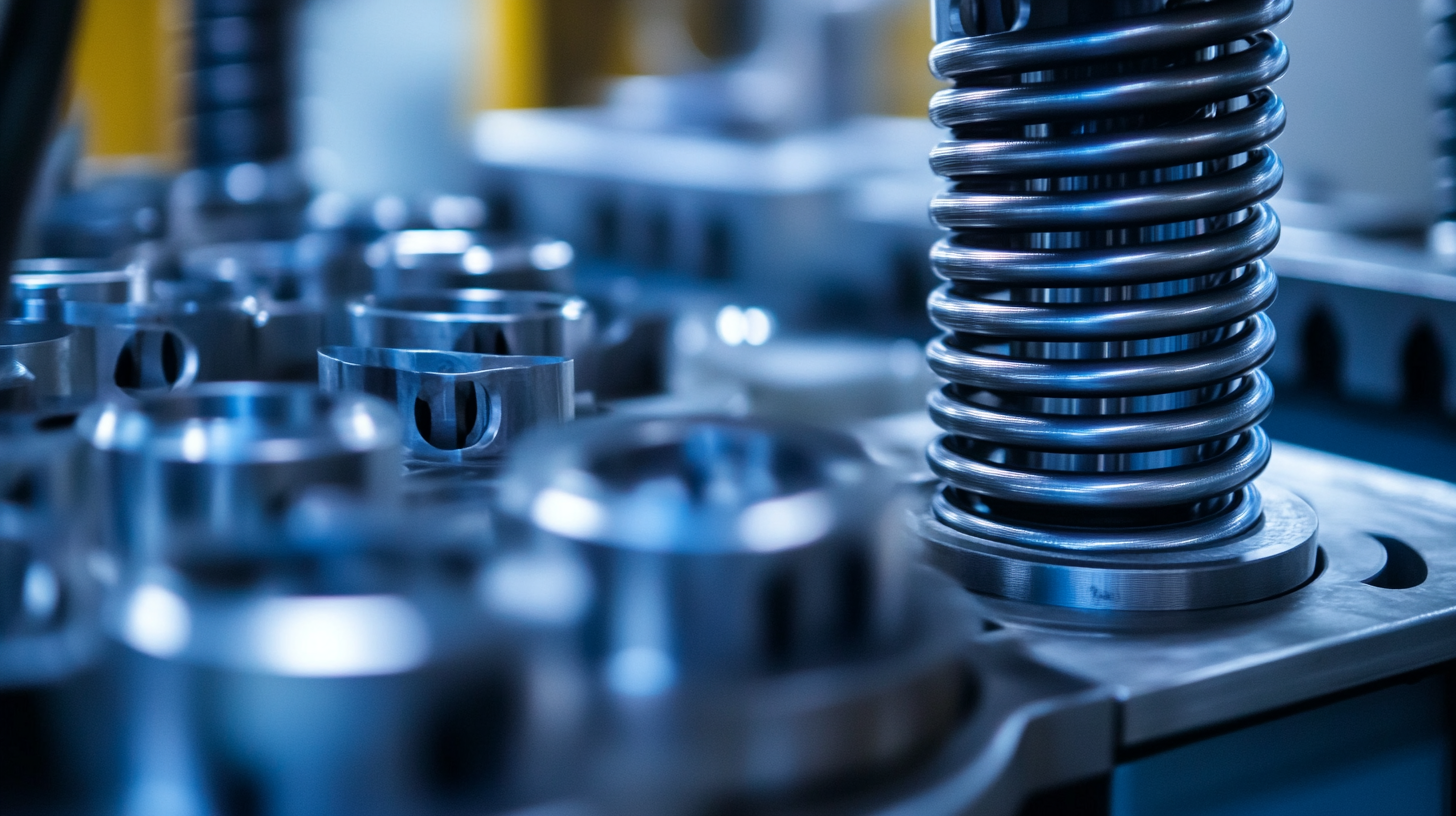
Adhere to the standards the world has established for touch small springs manufacture because this global standard is the answer for the product quality, safety and use. The standards play an important part in improving the reliability of function of touch devices as small touch springs can perform in various applications, from consumer electronics to automotive interfaces. In her report, the International Organization for Standardization (ISO) states that nearly 80% of international trade depends on harmonized standards. Therefore, compliance is not only advantageous but crucial for manufacturers seeking to have more markets in their arms. The global standards in small touch springs manufacturing can also correlate to the rather startling statistic that says about 30% of the products fail from quality inspections only because they did not comply with the standards set for them. Variability in performance and hence possible failure in the high-stake areas such as medical devices and automotive controls tend to arise due to inconsistent manufacturing practices. Further, a paper released by the Society of Manufacturing Engineers (SME) suggested that implementation of quality control across the board could bring down production costs to the tune of 20% thus showing that such standards not only take care of safety but also efficiency in monetary terms. There is a need for manufacturers to continuously keep abreast with the relevant changes in technology vis-OR-in relation to standards. Adoption of the latest ISO 9001 quality management system enables an organization to create a framework in which it can then incorporate the customers and the benefits of continuous improvement. These standards can also offer a way for these companies to streamline operations and ultimately waste less while developing a better product serving to both regulation and client need. With the globalization of the markets, adherence to these standards is becoming increasingly important in determining the competitive advantages of companies.

Manufacture of small touch springs must uphold key industry standards governing product quality, safety, and compatibility. Quality management systems with ISO 9001 as their central focus are some of the main standards for this industry. According to reports published by the International Organization for Standardization, firms that introduced ISO 9001 enhanced product consistency and reduced defects by as much as 30%. This means that the standard emphasizes delivering the systematized processes in the reduction of errors in production and increasing customer satisfaction.
Another important standard involved is RoHS, which, among others, limited the use of selected hazardous materials in electrical and electronic equipment. RoHS compliance, therefore, becomes very crucial for manufacturers of small touch springs applied in electronic devices. According to a study carried out by the European Commission, organizations that followed RoHS tend to benefit from both meeting the standards legally and improved marketing, with 70% of the said organizations reporting increased consumer confidence from compliance.
Next to the above standards is ASTM F468, which functions to set the standards concerning chemical and mechanical properties involved in spring material manufacturing. Such a standard should guarantee that small touch springs will be able to tolerate the rigors of daily use while upholding their performance integrity. According to ASTM International, by following ASTM standards, production costs can considerably reduce by an average of 25% owing to curbing wastage and ensuring efficiency.
On the whole, navigating through these rigorous industry standards is an absolute necessity for small touch spring manufacturers in their quest for excellence and competitive presence in the global market.

Where small touch springs are concerned, technical specification is the only means to ensure compliance and accuracy. These components are critical in various applications - majorly from consumer electronics to consumer automotive equipment - and careful and deliberate design and manufacture is required. Each small touch spring has to meet numerous stringent criteria for material selection, dimensional tolerances, and mechanical properties. A thorough understanding of these specifications guarantees compatibility with the intended application and enhances the overall reliability of the final product.
The ISO 9001 and the ASTM specification standards are generally acceptable for high-quality manufacturers who intend to manufacture touch springs. The standards specify the requirements of the production process for quality assurance purposes. Thus, each spring must undergo defined performance parameter testing, such as load capacity, fatigue resistance, and durability under different conditions. Product quality inspectors need to be strict during the production process, involving advanced tests like micro-hardness tests and fatigue life assessment.
Precision small touch monitoring springs manufacturing, however, includes calibration of machinery and careful attention to the end effects in the shaping and forming processes, neither of which can afford vagueness in specification. Any error in specification implies problems in end-product performance that may affect the elements of functionality and safety. By considering these technical specifications, manufacturers are able to realize springs that perform what they are designed for, gain clients' confidence, and make way for innovation and advancement in product design.

Transformations in the global market for small touch springs are being influenced by the technology used and the behavioral changes adopted by consumers. This market is estimated to grow from $19.2 billion in 2021 to $35.9 billion in 2026 at a compound annual growth rate (CAGR) of 13.5%, according to MarketsandMarkets about the touch sensor market. The demand thus generated directly influences the standards of design and manufacture of small touch springs, making it necessary for the manufacturers to start manufacturing components to meet the demand for efficiency, durability, and responsiveness.
Prominent among others is one major trend that has started ringing the bells in the world of small touch springs design: the increasing adoption of Internet-of-Things (IoT) enabled devices. Their increasing prevalence requires touch mechanisms to be compact and reliable because of their imminent installation within these space-deprived electronic devices. With miniaturized electronics, there is also demand for progressive materials and design techniques to keep up with the pace. Research and Markets have found that the intelligent appliances global market, where touch springs are one of the most frequently used components, is expected to exceed $100 billion by 2025. This further increases the demand for alignment of the manufacturing process with global standards to procure interoperability and heightened user experience.
Moreover, there is now a pressure shaping the world for sustainability manufacturing. The reports indicate that more consumers are favoring green raw materials and practices. Manufacturers now venture further to have recyclable raw materials in their processes due to market demand for sustainable products. So, in favor of or against, customers associate a brand's loyalty and reputation with how environmental a company or product is, thus, strategies of design that focused on sustainability are not going to benefit them only; they will be increasingly compulsory in the competition for small touch springs.
In manufacturing small touch springs, the quality of materials used is very important, as this is what determines the durability of the springs and their effective functioning. According to a report of ASTM International, the overall lifetimes and reliabilities of components in electronic devices are greatly influenced by the material standards as matters of design and manufacture. It is reported that high-grade stainless steel springs reduce wear and fatigue to prolong their service life by up to 30%, compared to inferior-quality springs.
The International Organization for Standardization (ISO) also advises that material quality standards, with ISO 9001 as an example, lead to consistency in the manufacture of processes and quality controls. Ensuring that these standards are met will help manufacturers safeguard the failure rates of such products, bringing about better customer satisfaction and less warranty claims. As reported by survey from Gartner, a company focusing on material quality on its manufacturing processes reduces product defects by 25%.
None of the properties of materials like tensile strength and corrosion resistance should be neglected. Research by the Institute of Mechanical Engineers shows that touch springs made from materials having high tensile strength can withstand larger loads without deforming and really are important for devices that require precision in their tactile feedback actions. Investing in better materials and meeting worldwide standards can be an assurance of the durability and efficiency of small touch springs, leading to good performance for products in a competitive electronics market.
The testing methods and the quality assurance processes are imperative to the manufacturing of small touch springs, particularly regarding reliability and performance under various operational conditions. With modernization, testing automation hindered the few remaining bits of manual intervention in this domain. The automated testing processes boost productivity while drastically reducing the risks attributed to human error. For instance, with AI-driven anomaly detection, potential failures could be detected at a very early stage of the production cycle, lifting quality assurance to another level.
Vibration testing has in working-aid development assurance, especially for electronics where small springs are involved. The tests take a look at the ability of these components to endure the stresses and strains of real-world applications. With appropriate consideration of vibrations and frequencies, springs are tested to guarantee compliance with such rigorous industry standards that the consumer is fully confident in the spring's ability to perform and endure.
The rapid expansion of the digital assurance and testing services market, expected to grow to USD 10 billion by 2031, is indicative of the growing significance of fully established testing strategies in the manufacturing arena. As companies tread the path of improving their quality assurance frameworks, it becomes imperative to adopt different innovative testing platforms, which can include unique quality assurance testing tools. Such advancements will not only ensure compliance with good global standards but also create a culture of continuous upgrade for product quality.
The small touch springs manufacturing sector is increasingly coming to grips with more rigid environmental regulations that influence production processes and compliance obligations. Recent trends in the U.S. environmental policy landscape suggest a major paradigm shift, especially with subsequent rollbacks of many regulations imposed during Trump's presidency, which were originally designed to curb carbon emissions from power plants and vehicular exhaust pollutants during Biden's term. By removing these spurious regulations, manufacturers may gain a competitive advantage through reduced compliance burdens.
Yet, the manufacturers must tread carefully as these constantly evolving regulations would give rise to an ambiguity of standards across markets in the world. Some areas may be easing regulations and others might be tying environmental policies. For example, Sarawak state has been actively implementing the laws on hazardous waste management. The contrast in view between the markets will complicate issues regarding international trade and manufacturing logistics, where knowledge of and compliance with local requirements are paramount to the success of the facility.
On the other hand, sustainability is a major and strong theme, and small touch spring manufacturers cannot turn a deaf ear to the call for responsible conduct. Awareness of the environment is growing among consumers and stakeholders even where regulation is being relaxed. This evolution urges companies to innovate and proactively seek sustainable alternatives in their production processes and enforce minimum global environmental legislation. As the industry continues to evolve, the combined emphasis on regulatory compliance and environmental stewardship will be a necessary condition for survival.
They are trained on data until October 2023.
The relevance of global standards for the manufacturing of small touch springs is increasingly important as many industries seek to improve their effectiveness in all dimensions of functioning and performance. As manufacturers around the world continue to search for ways in which they can definitely improve their manufacturing processes, so much more does the application of the updated and standard protocol requirements become necessary. Within the new frontiers developed by emerging technologies, these are applications in robotics and drones that can hardly do without the highly engineered small touch springs. Global standards could also guarantee that the components are sufficiently reliable to meet the exacting quality standards set by modern applications.
The development of specific trademarks and registration processes also indicates a growing recognition of the importance of specialized components in the manufacturing landscape. In fact, as new product groups have been found that cross the spectrum of consumer electronics to cutting-edge military technologies, the creation of an emerging thunder really calls for the standardization of a manufacturing environment. A common market could evolve from this, where manufacturers could be more easily matched across borders, thus prompting new innovations and efficiencies.
The future of global standards will be underpinned by several forces, including factors such as the general economic environment, regulatory environments, and the pressures that result from technology advancement as industries continue to evolve. All these worlds will ensure continued transformation of the framework for global standards and their applicability in different industries because to remain competitive, to maintain safety and reliability, and to promote interoperability, it is very important that one is not left behind in dealing with the rapid changes in the application of the standards across different regions. The implications of this are pretty significant; it will push manufacturers to rethink their approaches and adopt standardization as a launching pad towards future success.
Global standards are essential for ensuring product quality, safety, and interoperability, enhancing the reliability of touch devices and facilitating international trade.
Approximately 30% of products fail quality inspections due to non-compliance with established standards, leading to variability in performance and increased risk of failures.
Implementing standardized quality control processes can reduce production costs by up to 20%, ensuring safety and enhancing economic efficiency.
Technical specifications are crucial for compliance and precision, ensuring compatibility, reliability, and performance of the small touch springs.
Manufacturers should comply with international standards such as ISO 9001 and ASTM specifications, which dictate necessary quality assurance processes.
Precision is vital as any deviation from specifications can lead to performance failures, compromising functionality and safety in end products.
Changing environmental regulations can create inconsistencies in standards across global markets, complicating international trade and manufacturing logistics.
Growing environmental awareness among consumers drives manufacturers to innovate and seek sustainable practices, reinforcing the need to adhere to global environmental standards.
Manufacturers must navigate varying regulations, with some regions tightening policies while others relax them, necessitating adaptation to local standards for market success.
Compliance with global standards can enhance product reliability and boost market expansion opportunities, becoming a determining factor in a company's competitive advantage.


